Latest government data shows 126,000 children were electively home educated in England in autumn 2025 — and 175,900 were home educated at some point during 2024/25. You're not alone.
Homeschooling in the UK: A Clear Starting Point for KS1 & KS2 Parents
Start calm. Start confident. This page is for parents who want practical guidance, legal clarity and a first step that feels manageable — without trying to recreate school at the kitchen table.

Could home education be right for your family?
If you're looking for a calmer, more flexible, more thoughtful path for your child, home education may be worth considering. This isn't about copying school at the kitchen table. It's about creating a learning rhythm that fits your child properly.
Every family arrives at this decision differently. For some it's about wellbeing. For some it's about SEND, capacity, flexibility, or values. Done well, it can be a deeply positive choice.
Why parents explore it
- More flexibility in how and when learning happens
- A calmer environment for overwhelmed children
- More time for your child's pace, interests, and personality
- Space for personalised support and meaningful progress
- Freedom to build an education that actually fits
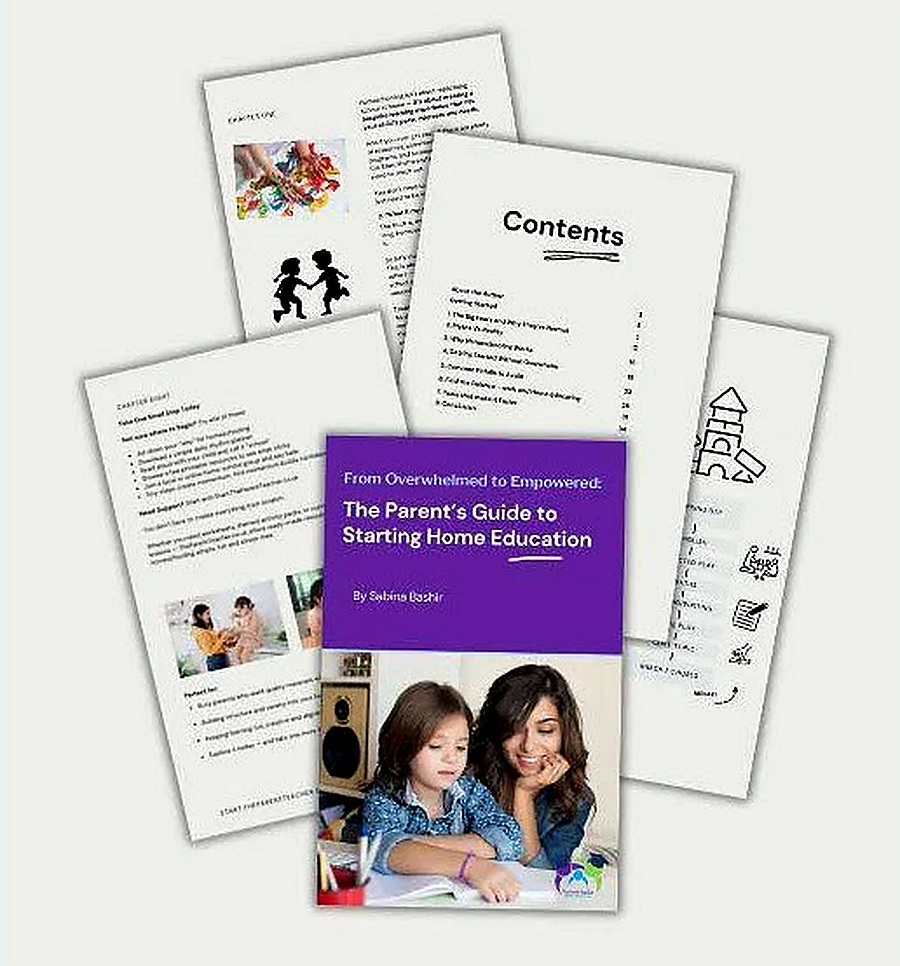
Why this free guide exists
Because starting can feel overwhelming. You do not need more panic. You need clear information, practical reassurance, and a first step that feels manageable.
- Understand what home education really looks like
- Know what questions to ask before you begin
- Feel clearer about routine, structure, and expectations
- Get reassurance that you don't need every answer on day one
You and the law
In the UK, parents have the right to educate their child otherwise than at school. That means home education is a legal choice.
You do not need to recreate a school timetable. You do need to provide a suitable education — and that can look different from family to family.
A few essentials to know
- Home education is legal in the UK
- You do not have to follow a school timetable
- Education should be suitable to age, ability, and needs
- Deregistration matters if your child is currently on roll
- Keeping records can be helpful
Frequently Asked Questions
No. Parents do not need teaching qualifications to home educate. What matters is that the education is suitable for the child.
No. Many parents use it as a guide, but home educators are not required to follow it in the same way schools are.
Many parents choose home education because it allows a more personalised approach. SEND may bring extra considerations, which is why informed support matters.